



For decades, construction has followed the same painful cycle: architects design, contractors price, and owners face the inevitable sticker shock.
Target Value Design (TVD) flips this script entirely by treating budget as a design constraint from day one.
It isn't new, but what’s changed is cloud-based preconstruction technology has finally made it work at scale.
Contractors who perform TVD the modern way are winning more work, delivering projects 15-20% below market cost, and transforming from vendors into strategic partners that owners can't imagine building without.
Keep reading and you’ll learn how Target Value Design works, the three rules that make it successful, and how preconstruction software turns theory into practice.
What is Target Value Design?
Unlike traditional delivery methods where the design is finalized and then priced, Target Value Design is a construction methodology that establishes a target cost upfront.
Based in lean construction principles, it blends three core elements from the earliest stages of a project:
- Design teams who create the vision and specifications
- Cost estimators who provide real-time pricing feedback
- Construction teams who ensure buildability and efficiency
It becomes particularly effective when paired with delivery methods like Integrated Project Delivery (IPD) and design-build; especially in joint venture environments where multiple contractors need shared cost visibility.
The 3 biggest rules of target value design
#1: The target cost must never be exceeded
This is the cardinal rule of TVD. Once the target cost is established, it becomes your constraint. When design improvements or changes increase costs in one area, the team must find offsetting savings elsewhere without compromising the project's core value.
Tip: The right cost modelling software helps make this easier by supporting quick “what-if” scenarios, where teams can compare estimates side-by-side and deliberately trade costs without losing sight of the target.
#2: Base your targets on what worked in the past
Without access to accurate past project data, teams either set target costs too conservatively (leaving money on the table) or too aggressively (setting themselves up for failure).
Instead of digging through old spreadsheets or relying on estimators' memory, look to historical data to drive TVD projects. Then, you can analyze cost performance across similar project types and see what was efficient before.
#3: Get stakeholders into the same platform
When estimates live in desktop software or isolated spreadsheets, one person updates the estimate while everyone else waits.
TVD models are successful when multiple team members can work on the same estimate simultaneously — one person updating architectural costs while another refines MEP pricing and a third models design alternatives.
Brian Labossier from Wright-Ryan Construction sees the traditional smattering of spreadsheets as nothing more than an efficiency hurdle.
"On those bigger projects where you’re building out your schematic design with all your line items…I don't have to go back and forth among 30 spreadsheets — it's all living in Ediphi."
Traditional vs. target value design workflows
To understand TVD's impact, it's helpful to first examine life before it.
A traditional workflow looks like:
- Architects and engineers develop the design based on the owner's program requirements (often with minimal input from construction teams)
- Estimators and cost consultants assign a cost to the project
- If the estimate exceeds the budget (it often does), the team conducts value engineering to remove scope or downgrade specifications
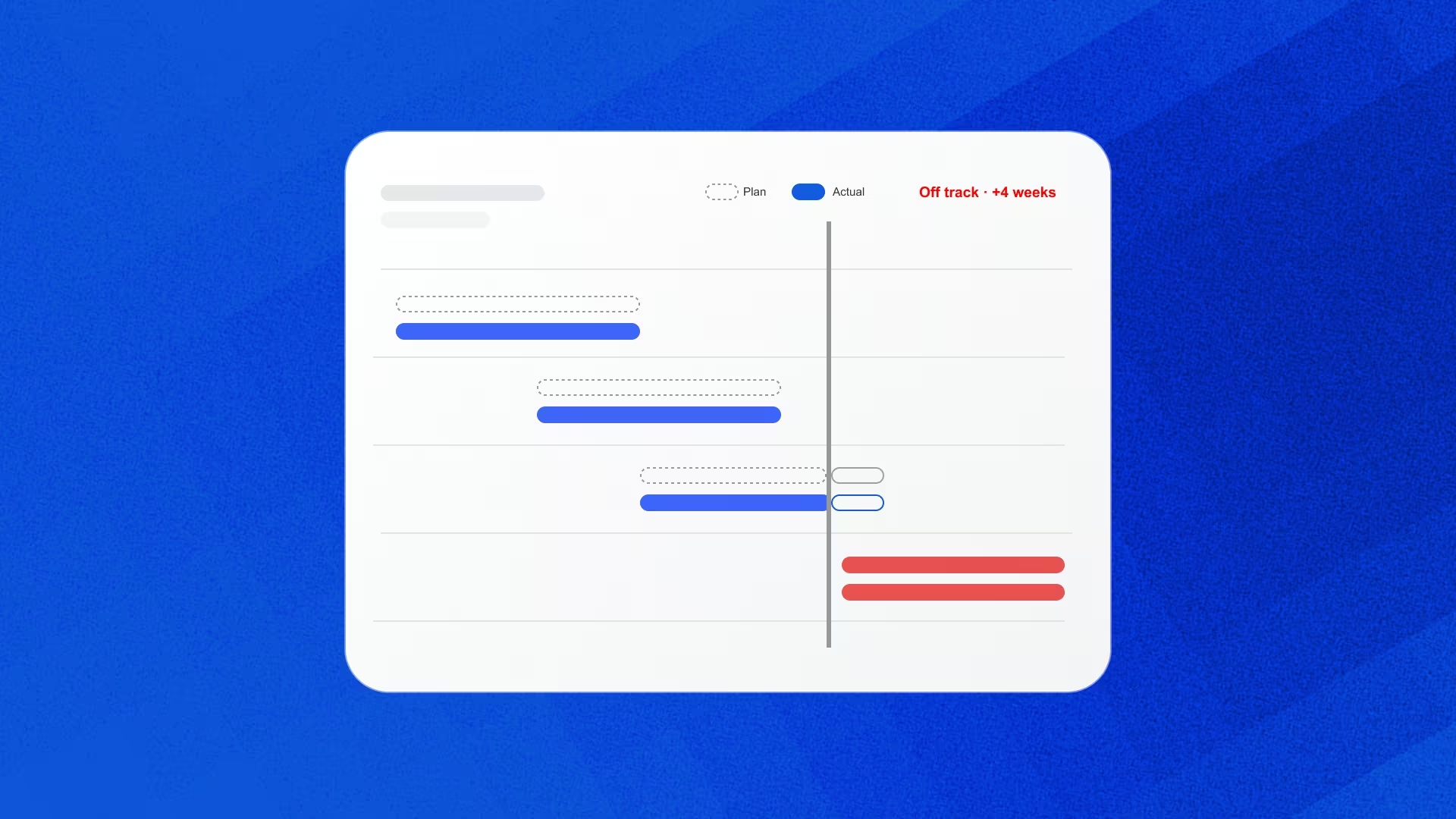
- More back-and-forths (the industry average is 6+ cost revisions per estimate…)
- The revised design goes out to bid
- The selected contractor builds what was designed
But from this approach, problems emerge.
CEO and long-time preconstruction tech exec, Dustin DeVan, poses a question to the entire preconstruction industry:
“Why are we pricing designs we could never afford in the first place?”
The traditional process is reactive. It treats cost as an output that's discovered after design decisions are made, leading to a cycle of designing, pricing, and redesigning.
As one estimator described the old way: "We’re often left figuring out all of this information in the last mile [of a project]."
The new way? Putting cost before design
Target Value Design inverts the old model by prioritizing cost — and cloud-based preconstruction platforms make it dramatically more efficient and collaborative.
With approximately 75% of contractors still relying on manual spreadsheets or aging desktop software, the move to cloud-based TVD workflows represents a generational leap in capability.
Here is the future of reaching target-value design.
- Establish target cost with early conceptual estimates. Owner and project team align on an allowable budget using parametric data. And doing it in a responsive software means you can quickly price initial concepts with minimal design information — even from a "napkin sketch." As one Stevens Construction estimator explains: "We're doing it right now on a project where we don't have a floor plan,” he says, “We just have the number of offices, exam rooms, and bathrooms they want. We can plug that in, and when they ask us 'How much square footage do we need?', we can tell them."
- Explore the design alternatives within target cost. With the initial budget in hand, you can explore the design options that meet that budget. If it’s in the cloud, stakeholders can access live estimates with all the detailed line-item breakouts and finish schedules even at the earliest of conceptual phases.
- Continuously validate costs as design evolves: Estimators update estimates from initial design data without starting from scratch. Use Groups to categorize different building uses (retail, apartments, parking) while dynamic formulas automatically adjust costs as parameters change.
- Review progress and make informed trade-offs. As the project moves through preconstruction, cost remains at the forefront. Regular budget alignment sessions can reference the evolving estimates with key milestones to track cost evolution throughout preconstruction. Teams evaluate design alternatives based on value-to-cost ratios, functionality, and schedule impacts all before locking in final design decisions. (Bonus: Ediphi's Unit Price Catalog centralizes historical cost data so you can reference what’s worked along the way.)
- Transition seamlessly to detailed estimates and procurement. Move from conceptual to detailed estimates using quantity takeoffs within the same cloud platform. On complex capital projects with "billions of dollars on the line, and hundreds of stakeholders contributing to the estimate" (James Pease, UCSF), Ediphi's variance tracking and collaborative procurement maintain continuity from preconstruction through construction.
As one user described it, this model in the cloud is “like flipping a switch from 'lonely estimator' to 'connected precon team.'"
⭐ Key advantages of reaching TVD with Ediphi:
- Estimation times are drastically reduced, with one preconstruction team reporting saving hour per estimate
- Multi-user collaboration eliminates the painful "black box" problem, with real-time presence indicators showing who's editing what
- Conceptual estimates built on parametric data and historical benchmarks from Ediphi's historical cost database are more reliable than traditional “cost-per-square-foot” approximations
- At the Last Mile of the project, an Excel integration puts reports in a customized format, ready for presentation
Making target value design work for your projects
The industry's old cycle — design, price, panic, redesign — isn't just inefficient.
It's leaving money on the table. And, at the end of the day, eroding the kind of trust that’s always been crucial to construction,
Target Value Design breaks this cycle, but only when you have the right tools to make it work.
As Scott Menard from Suffolk Construction put it: "We increased revenue per estimator by $20 million and the return on investment was 1,900 percent. I've never seen anything like that."
Whether you're pricing your first conceptual estimate from a napkin sketch or coordinating hundreds of stakeholders on a billion-dollar capital project, the question isn't whether TVD works — it's whether your preconstruction process can support it.
Ready to see how Ediphi makes Target Value Design achievable at scale? Schedule a demo to discover how leading contractors are delivering more value, winning more work, and never going back to the old way.

.svg)




.svg)
.svg)