



Construction has spent decades getting better at the wrong thing.
The industry optimized for producing estimates: faster quantity takeoff, cleaner bids, better templates. And it worked. The output got better.
But estimates are just the receipt.
The actual value — the reasoning, the trade-offs, the why behind every decision — is left behind every time a project closes. So the next project starts from zero. Again.
This isn't an estimating problem. It's a decision-capture problem. And it's the one gap construction tech hasn't touched until now.
This is what that gap is costing you and what closing it actually looks like.
You can see where you landed, but not how you got there
Every completed estimate is the result of hundreds of individual cost decisions that range from “What happens if we reduce glazing by 20%?” to “Can we buy out early to lock pricing?”
Behind each of these decisions is a world of reasoning and almost none of it gets captured currently.
This is why every new project still feels like starting over.
- Teams rely on memory instead of data
- Value engineering is trapped in PDFs and emails
- Lessons learned aren’t structured or reusable
Prashant Sharma, a Senior Estimator at DPR Construction, put it well in a recent conversation: without somewhere to put historical knowledge, the junior estimators on his team never had a chance to access his decades of expertise. (Prashant’s full story here)
Even the best estimators are forced to rebuild intuition, project after project.
What’s missing? The record of your cost decisions
Preconstruction is a continuous loop of:
- Pricing concepts
- Making trade-offs
- Validating against the market
- Adjusting
- Then repeating
But today, only that first step is systematized.
The rest happens in meetings, spreadsheets, side conversations, inbox threads; places that hold no water because there is no record.
Why is this a problem worth solving? Three reasons:
1. Volatility is the new normal
Material pricing, labor constraints, and supply chains are always changing so estimates that are static age instantly. How quickly we are able to reprice decisions has become a competitive differentiator.
2. Owners expect real-time answers
Owners don’t want to hear that you’ll get back to them in two weeks. They want to see:
- Instant trade-off analysis
- Real-time budget alignment
- Continuous cost feedback during design
This is the promise of target value design — but TVD only works when the decision logic is structured and accessible in real time. The estimate alone isn't enough.
3. AI can’t work without structured decisions
Everyone is excited about AI in construction, but AI needs data to create anything worthwhile. Without it, AI can't reason about cost, it can only approximate. And approximations dressed up as intelligence are just faster wrong answers.
Before AI can transform preconstruction, we need to fix how we track cost decisions. That's the data layer it actually needs.
I wrote about AI in preconstruction in depth. Full piece here.
Shifting from estimating tools to pricing engines
The next generation of construction technology is focused on helping builders create real pricing engines. They are increasingly capable of helping you:
- Track every cost decision
- Connect decisions to real market data
- Learn from outcomes across projects
- Suggest better options in real time
In other words, it won't just tell you what something costs. It will help you decide what it should cost.
At Ediphi, that's the version of preconstruction we think about every day — one where you don't have to start from zero. Where:
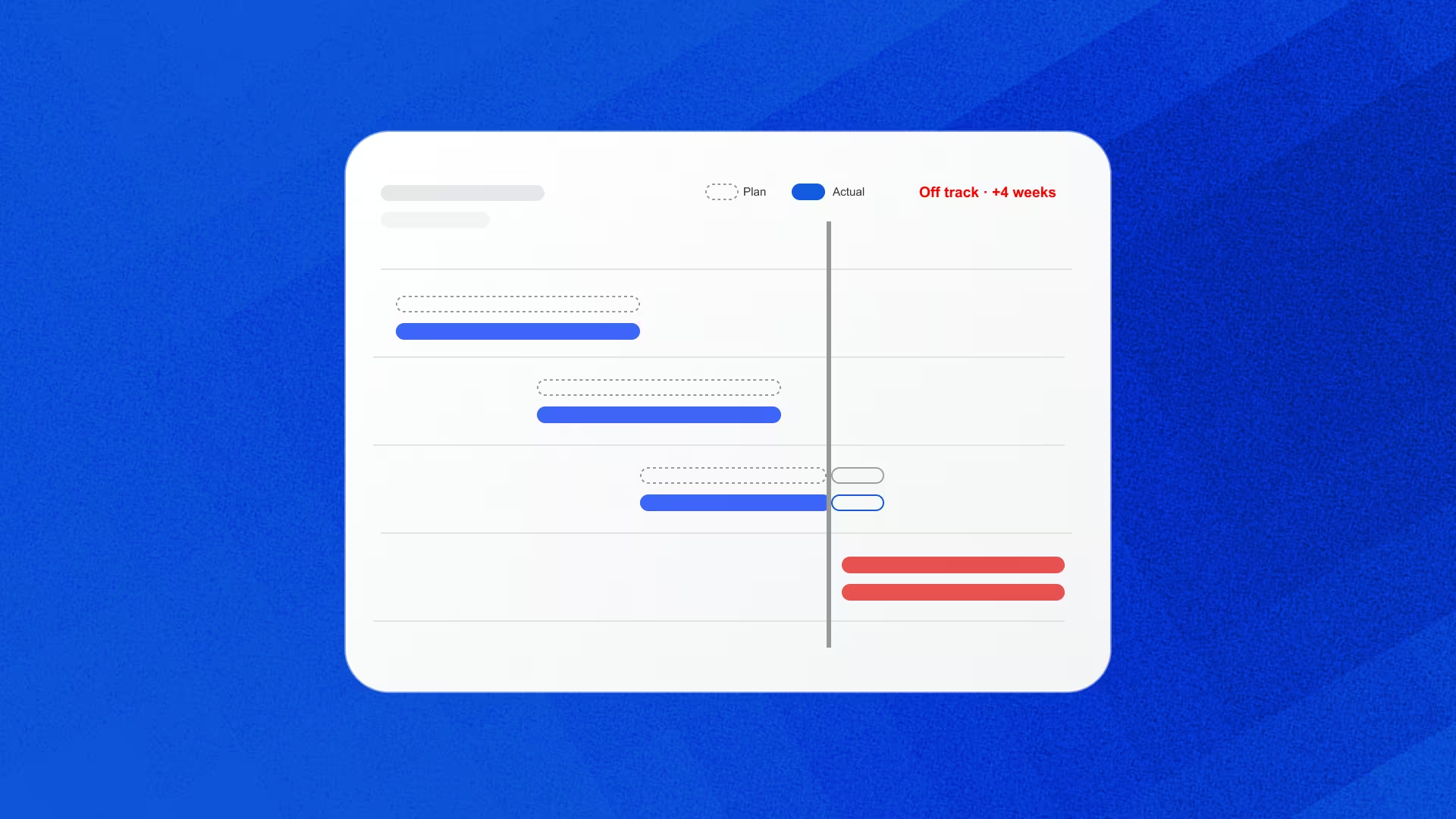
- Every VE option is structured, not buried in a PDF
- Every buyout feeds back into future pricing
- Every estimate is connected to actual subcontractor outcomes
- Every decision builds institutional knowledge
This is the software architecture we're building: a system that captures estimates in full context, tracks how scope and assumptions evolve, stores historical pricing, and connects early estimates to real subcontractor outcomes.
If that's the problem you're trying to solve, we'd love to show you what we're building. Chat with us here.

.svg)




.svg)
.svg)